
From touchpoints to journeys: lessons from the unified driver experience




Juan Wendeus
Strategic Design Director
Digital Brand Experience (IXI)
▶ Listen to this article
Narrated by Ellen Björck | 8 min
Summary
Maija Bigestans argues that brand experience often breaks where ownership changes: between teams, systems, channels and moments. The unified driver experience work gave us a practical way to look at that challenge in one real journey.
As vehicles become more connected, the driver's experience extends beyond the vehicle itself. Applications, in-vehicle interfaces, services and other digital touchpoints all play a part. The challenge is not only to make each touchpoint good, but to make them work together as one coherent experience.
In our work, journey mapping helped us see where that coherence is tested in practice. It showed us that coherence is not primarily an interface problem. It is a journey problem.
We need to stop looking at the experience one product at a time
Why we looked beyond individual products
Digital products naturally develop around different purposes, technologies and areas of responsibility. From inside an organisation, those boundaries can make sense.
From the driver’s perspective, they should largely disappear.
A driver experiences a working day. They prepare, enter the vehicle, carry out assignments, respond to changing circumstances, access information and complete their work. Different digital touchpoints appear along the way, but for the driver, it is all part of one continuous working day.
That is why we needed to stop looking at the experience one product at a time. An interface can be consistent on its own and still create a fragmented journey if information, terminology or context does not carry through to the next step.
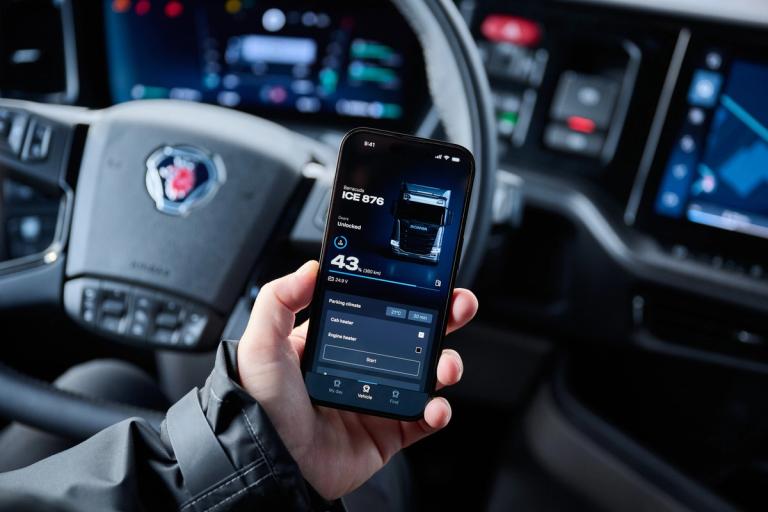
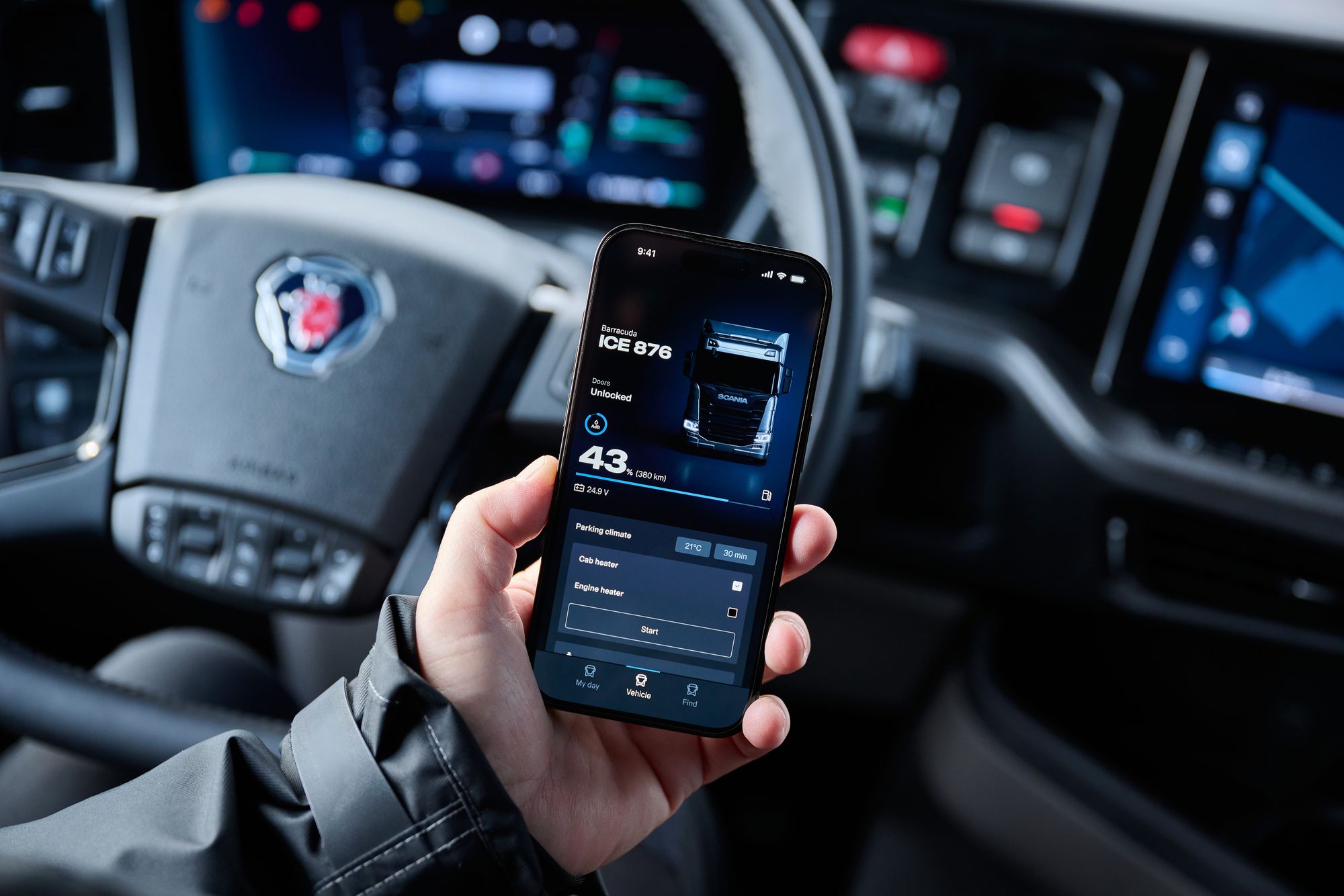
Journey mapping can be used as a shared way to understand
What we did
We used journey mapping as a shared way to understand how different digital touchpoints support the driver’s working day.
- Mapped the driver’s goals and situations across the journey.
- Looked at where apps, onboard interfaces, services and other digital touchpoints entered the experience.
- Compared what the driver needed at each moment with how well the experience continued from one interaction to another.
- Brought people from different disciplines into the same conversation, using the journey as a common reference point.
The map itself was useful. But the most valuable part was the discussion it created. When several disciplines looked at the same journey, we could see connections that were difficult to spot from within one product or area.
What the journey showed
Three lessons became clear:
1. A consistent interface is not enough
Common components, familiar interaction patterns, consistent terminology and a recognisable visual expression all matter. But they do not automatically create one coherent experience. The journey can still feel fragmented if the next interaction does not reflect what has already happened.
2. Transitions are where continuity is tested
The most revealing moments were often between touchpoints: moving from preparation to action, from one channel to another, from physical to digital contexts, or returning to a task after an interruption. These are the moments that can easily fall between areas of ownership, even though they are where the driver expects continuity.
3. Some experience problems need shared decisions
Some opportunities were close to the interface. Others depended on shared information, technical capabilities or decisions involving several parts of the organisation. That distinction matters, because coherence cannot always be designed at the end of the development process. Some experience decisions need to happen earlier.


More than a picture of an experience
What changed in practice
The journey map helped us move from a broad ambition – to make the experience more unified – to more specific questions that teams could act on.
- Where does friction have the greatest effect on the driver’s work?
- Which moments require continuity, not just consistency?
- Which inconsistencies are inconvenient, and which could affect confidence or efficiency?
- Where do several teams need to solve something together?
It also helped us separate three related levels of coherence.
- Visual coherence: the experience feels recognisable through elements such as typography, colour, iconography and layout.
- Interaction coherence: similar things behave in familiar ways and use language consistently.
- Continuity across touchpoints: context, information and intent carry through the journey when the driver needs them.
This made the journey map more than a picture of an experience. It became a shared decision-making tool for identifying where coherence would make a real difference.
The real work starts when teams use the map to ask better questions
What teams can take from this
For teams working with connected digital products, the practical lesson is to start with the user journey before trying to unify the touchpoints.
Useful questions to ask early are:
- What is the user trying to achieve across the whole journey?
- Where does the user move between products, systems, channels or contexts?
- What information, terminology or intent needs to continue into the next step?
- Is the problem visual, interaction-related, or does it require deeper continuity between systems and teams?
- Who needs to be involved to solve the moment properly?
What I carry into the next journey
Looking back, my main lesson is simple: start with the journey before trying to unify the touchpoints.
The real work starts when teams use the map to ask better questions, challenge their own boundaries and decide which moments deserve shared attention.
A coherent experience is not created by making every interface look or behave the same. It comes from understanding what the user is trying to achieve and then making deliberate choices about how different parts of the ecosystem support that journey together.
The complexity behind the experience may remain. But the driver should not have to feel it.